Griddy: Football Puzzles
- 4.5
- Rating
- 10.00K
- Installs
- Free
- Price

 Analysis by App-foxy
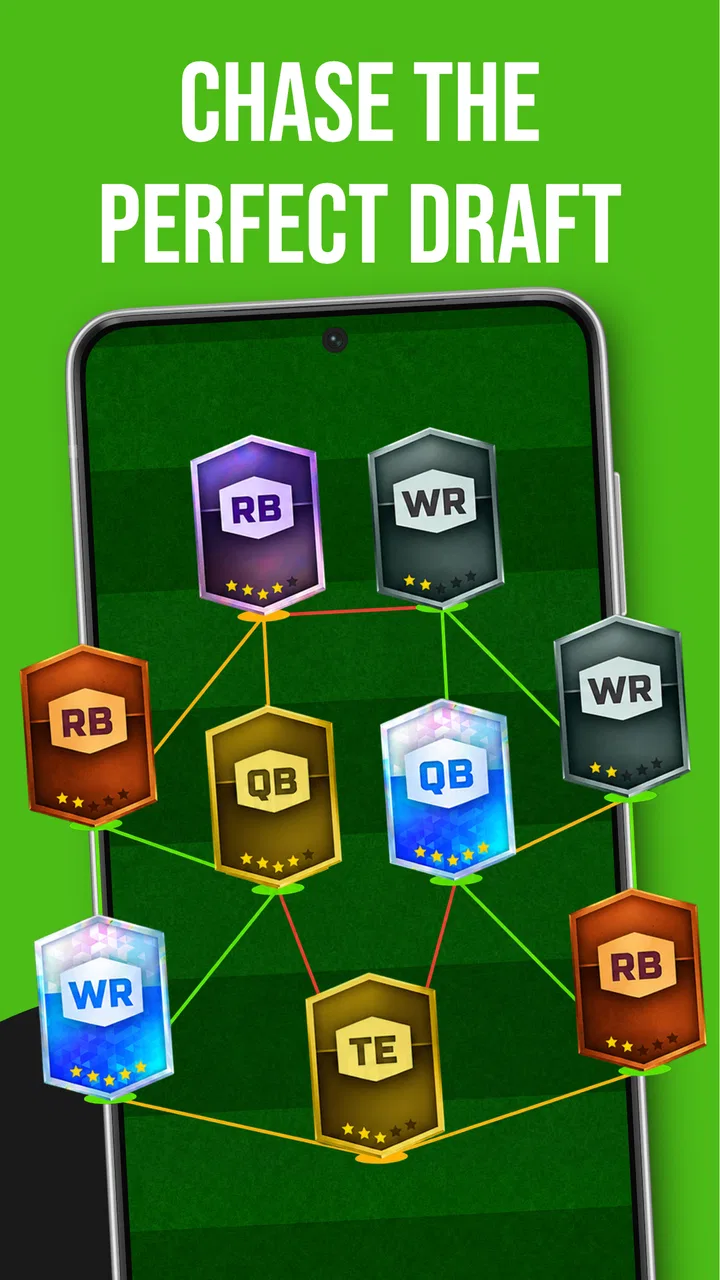
I found Griddy: Football Puzzles most interesting when I treated it as a shared-device game rather than something to play for hours alone. It is a free sports game from Griddy built around fantasy drafting and strategy, and that combination makes it easy to hand the phone to another person for a quick decision, a short challenge, or a debate about which player should make the team. I would not describe it as a full football simulation. Its appeal is the thinking around the lineup, not the feeling of controlling every movement on the pitch.
That distinction matters in a household. One person can enjoy the puzzle of building a stronger squad, while another may prefer the immediate action of a conventional football game. In my experience, Griddy: Football Puzzles works best for people who like weighing choices, spotting patterns, and changing their approach after a result. It is less suitable for someone who expects realistic match controls, a deep career mode, or a game that can be enjoyed without paying attention to its strategic layer.
How Griddy fits into a shared phone or tablet
A realistic use case is a short break at home: one family member starts a draft, another looks over the available choices, and a third person questions the selection before the team is committed. That kind of handoff suits a fantasy strategy game better than a fast action title because the useful part is visible on the screen. You do not need to explain complicated controls before someone can offer an opinion. “Take this player or save the choice?” is a much easier conversation than passing around a game that depends on precise timing.
You May Also Like

 Blood Strike: 2.5 Anniversary
Blood Strike’s Loadouts Turn Every Drop Into a Tactical Gamble
A close look at Blood Strike’s custom loadouts: how fast access to signature weapons reshapes its battle royale rhythm, rewards preparation, and narrows the gap between fights.

 Pandora - Music & Podcasts
Pandora’s Music Is Easy to Start, but Harder to Recover
Pandora’s strength is its low-effort path from a seed to a station. Its weak spot is how much confidence it asks you to place in connection, setup, and quiet recovery.

 8 Ball Pool
 Is Built on Rivalries, Rematches, and Routine
A close look at the rivalries, rematches, shared routines, and unanswered safety questions that turn a quick pool match into a persistent mobile community.

 Samsung Music
’s Quiet Strength Is Playing What You Already Own
Its reach comes less from spectacle than from dependable access to a personal library. That simplicity is both the app’s strongest retention engine and its ceiling.

 AccuWeather: Weather Radar
AccuWeather Review: A Quick, Clear Forecast for Everyday Decisions
For everyday plans, the best forecast is the one you can understand quickly. AccuWeather makes rain timing, radar, and local conditions easy to act on, with a few trade-offs.

 Hill Climb Racing
Why Hill Climb Racing Still Turns Crashes Into One More Run
A tiny car, a bumpy hill and one more upgrade: Hill Climb Racing keeps resurfacing because its simple chaos makes every near-miss feel personal.
More From Our News Desk



I also like that the central decision can create a natural stopping point. A shared device often gets interrupted by messages, chores, meals, or someone needing the phone for something else. A game built around drafting and planning is more forgiving of those interruptions than a live match. Still, I would avoid assuming that every round is equally convenient to pause. The sensible habit is to finish a decision or result before handing the device over, rather than switching users in the middle of an important choice.
For a couple or a group of friends, the game can become a small argument about risk. One player may favor a dependable lineup, while another may chase a more ambitious combination. That is where the title feels more social than its store summary suggests. The shared enjoyment comes from comparing judgment, not necessarily from competing in a traditional head-to-head match. If your household wants a game that supports conversation, it has a clear advantage over many solo sports apps.
There is also a practical trade-off. A shared device means that the person holding it may control the entire session, while everyone else becomes an adviser. That works when the group is patient, but it can feel passive if one player always makes the final call. I recommend rotating the decision-maker after each meaningful draft choice. It keeps the experience collaborative and makes it easier to tell whether the fun comes from the game itself or simply from one person explaining what to do.
What to settle before anyone starts
Because Griddy: Football Puzzles includes in-app purchases, I would establish a simple household rule before giving it to a child or letting it circulate among several people. The available purchases range from $1.99 to $99.99 per item, so “free to install” should not be treated as the same thing as “no spending is possible.” I would decide who is allowed to make purchases, whether the device owner must approve them, and whether the game is being used only as a no-spend experience.
This is not a criticism unique to this game; it is a matter of matching the app to the device. On a personal phone, the owner can keep control of spending. On a family tablet, the boundaries need to be spoken aloud because several people may assume they have the same authority. A child who understands the draft mechanics may still not understand the real-world meaning of a purchase. I would separate those two kinds of permission clearly.
The game is free, which makes trying it straightforward, but the purchase range changes how I judge it for a shared screen. Adults can decide whether optional spending is worthwhile for their own goals. For younger players, I would begin with a no-purchase arrangement and watch how the progression feels before deciding anything else. That approach gives the household a chance to evaluate the core strategy without confusing paid acceleration or extras with the basic quality of the game.
Another useful boundary is time. A strategy game can feel harmless because it lacks the constant physical intensity of an action title, yet the desire to improve a lineup can still encourage repeated sessions. I would set a natural endpoint, such as completing a draft or reviewing a result, rather than relying on “one more try.” This is especially helpful when several people share a device and one person’s turn could quietly become the whole evening.
On the technical side, the listed minimum operating system is Android 10. That is worth checking before planning to install it on an older household phone or tablet. The current version is 1.7.4, so I would also make sure the device can handle the current release rather than assuming that an old installation will behave identically. These details are small, but compatibility problems can create unnecessary arguments when everyone is ready to play.
Coordinating choices instead of taking over
The strongest shared-use method is to divide the session into roles. One person reads the available options, another explains the preferred strategy, and a third makes the final choice. Then rotate those roles. This turns the draft into a compact exercise in reasoning and prevents the most experienced player from becoming the permanent manager. It also helps younger players learn why a choice was made instead of merely copying an adult’s selection.
I would encourage players to say what they are optimizing before they pick. Are they trying to build a balanced team, protect a safe result, or experiment with a risky idea? The game becomes more understandable when the goal is stated first. Even if the selection fails, the group can judge the reasoning rather than treating the outcome as proof that the person made a foolish decision.
A less obvious benefit is that this structure exposes different playing styles quickly. Someone who normally dislikes sports games may still enjoy the planning because the focus is not on fast controls. Conversely, a football fan who knows the sport well may become frustrated if the strategic abstraction is not what they wanted. Sharing the device makes that difference visible early, which can save money and disappointment compared with assuming that every football-themed game offers the same experience.
For a busy household, I would use short review moments rather than long discussions. After a result, ask what worked, what was surprising, and what the next person would change. That is enough to create coordination without turning a casual game into a formal analysis session. It also keeps the focus on decisions that players can actually make, rather than on imagined systems or hidden rules that the game may not emphasize.
One practical tip is to keep a spoken record of the team’s current plan when handing over the device. Say, for example, “We are testing a safer lineup this time,” or “We are choosing the unusual option to see whether it changes the result.” This prevents the next player from unknowingly undoing the experiment. It sounds minor, but shared play becomes much smoother when each person knows whether they are continuing a plan or starting a new one.
Age context and trust on a family device
The content rating is Everyone, which makes the game broadly approachable from an age standpoint. I would still treat that rating as a description of content suitability, not as a substitute for supervision around spending, screen time, or account access. A child can be perfectly comfortable with the football puzzle while still needing an adult to define what the device may be used for.
Trust also depends on keeping account boundaries clear. If the game is installed on a device used by several people, I would make sure everyone knows whose account is active before beginning. The important question is not only who is playing, but also whose progress, purchases, and decisions are connected to that session. I would not let a guest assume that a shared tablet automatically means shared ownership of the game account.
This matters particularly when an adult and child take turns. The adult may want to experiment, while the child may care about preserving a carefully built team. Those are different priorities. I recommend agreeing in advance whether the session is for experimentation or for maintaining the existing strategy. That simple distinction protects trust better than trying to repair frustration after an unwanted change has already happened.
The Everyone rating also makes Griddy: Football Puzzles a reasonable candidate for introducing a younger player to strategic sports games, provided the adult explains the difference between an in-game decision and a real purchase. I would play alongside a child at first, not because the controls are necessarily difficult, but because the value of the game lies in understanding choices. The best shared session is one where the child can explain a decision, not merely tap wherever an older player points.
For teenagers and adults, the conversation changes. They may not need help understanding the idea of a draft, but they may want more independence and less commentary. In that case, coordination should mean agreeing on device use and spending rather than supervising every move. A household that respects those boundaries will get more enjoyment from the game than one that treats every shared session as a lesson.
Where it beats ordinary football alternatives
Compared with a conventional football game, Griddy: Football Puzzles asks for a different kind of attention. You are not choosing it for the thrill of direct control, detailed match movement, or the satisfaction of learning a large control scheme. You choose it when the interesting question is which option creates the better team or strategy. That makes it easier to play in a group and less demanding when the device is being passed around.
It can also suit people who enjoy fantasy sports ideas but do not want the commitment of following real-world fixtures or managing a long-running league. The fantasy element gives the decisions a sporting identity, while the puzzle framing makes it feel more contained. For me, that is the clearest reason to try it: it offers a strategic football-flavored activity without requiring the same kind of attention as a full simulation.
The comparison becomes less favorable if you want rich realism. A traditional football title is the better choice for someone who wants to control attacks, defend manually, or feel responsible for every moment of a match. A management simulator may be better for a player who wants extensive statistics, transfers, tactics, and long-term club development. Griddy sits between those expectations only if you value compact decisions over detailed simulation.
It also differs from a pure puzzle game. The football setting gives the choices context, but a player who wants abstract logic challenges may find the sports theme less important than the underlying decisions. In that case, a dedicated puzzle app could offer more variety of puzzle types. Griddy is most convincing when the fantasy draft itself is part of the fun, not merely decoration around a generic challenge.
Who should try it, and who should skip it
I would recommend it to football fans who enjoy discussing lineups, casual strategy players who prefer decisions to reflexes, and households looking for a game that can support short collaborative sessions. It is especially appealing if your group likes disagreeing about the “right” choice and then checking the result. The free entry point makes it easy to test that style without committing immediately to a purchase.
I would be more cautious about recommending it to someone who wants a complete sports package. If your ideal football game includes direct control, realistic match presentation, or a large management system, this may feel too focused. I would also skip it for a household that does not want to discuss in-app purchase boundaries. The game can be free to start, but the presence of paid items means the device owner should remain in charge of spending.
Another trade-off concerns attention span. The game is suitable for a quick shared decision, but players who need constant action may see planning as a delay. Meanwhile, players who love deep analysis may eventually want more control than a compact fantasy puzzle provides. Its audience is the middle ground: people who want enough strategy to debate a choice, without turning football into a full-time management project.
The rating history suggests that the game has found a meaningful audience, with a 4.5 average from around 862 ratings and over 10 thousand installs. I read that as encouraging rather than definitive. It indicates that the concept resonates with many players, but it does not remove the central question of fit. A well-liked game can still be wrong for someone who wants simulation, action, or a completely purchase-free experience.
My household verdict
After looking at it through the lens of shared use, I see Griddy: Football Puzzles as a conversation-friendly sports game with a clear identity. Its best moments come from making a choice, defending it, and seeing whether the resulting strategy holds up. That loop is simple to explain and works well when one phone or tablet is moving between people.
My main advice is to decide the boundaries before the first draft: who controls the account, who can spend, whether experiments may change an existing plan, and when the session ends. Those rules are more important on a family device than any individual football decision. Once they are clear, the game can provide a relaxed way for different ages and skill levels to participate without requiring everyone to want the same kind of sports experience.
Griddy is free, rated Everyone, and developed by Griddy, so it is easy to approach as a casual trial. The current release, 1.7.4, supports checking the app as it stands now, while the Android 10 minimum is a practical compatibility point for older devices. I would install it for a household that enjoys fantasy choices and friendly debate, but I would not present it as a replacement for a football simulator or a deep management game.
My final recommendation is simple: try it when the fun is choosing together, not controlling every kick. If that sounds like your kind of football game, the compact strategy format can make a shared device feel surprisingly social. If your priority is realism, constant action, or tightly controlled spending with no extra discussion, another option will probably suit your household better.
FAQs for Griddy: Football Puzzles
01What is Griddy: Football Puzzles and how is it played?
Griddy: Football Puzzles is a football-themed puzzle game that combines quick brain-teasing challenges with familiar soccer elements. Instead of controlling a full match, you generally solve level-based puzzles by arranging, matching, connecting, or making strategic moves related to football situations. The game is designed for short sessions, making it suitable for casual play, although later stages may require more planning and careful use of available moves.
02Is Griddy: Football Puzzles free to download and play?
The game can generally be downloaded for free, but players should expect optional in-app purchases or advertising, depending on the version and platform. Some purchases may provide extra hints, remove advertisements, or speed up progress rather than being required to complete every level. Before downloading, check the store listing for the current pricing, available purchase options, and whether the game includes ads or other monetized features.
03Does Griddy: Football Puzzles require an internet connection?
Griddy: Football Puzzles may allow some basic puzzle gameplay without a constant internet connection, which is useful when traveling or playing offline. However, an internet connection can still be necessary for advertisements, in-app purchases, updates, cloud features, rankings, or other online services. Offline availability may also vary between versions, so it is best to test the game after installation rather than assuming every feature works without mobile data or Wi-Fi.
04Is Griddy: Football Puzzles suitable for children and casual players?
The game is approachable for casual players because its football theme and short puzzle levels are easy to understand, while the gradual increase in difficulty provides a challenge for more experienced users. Parents should still review the age rating, advertising, and in-app purchase settings before allowing children to play. The game does not require advanced football knowledge, but younger players may need help with difficult levels or purchase-related prompts.
05What are the main advantages and possible drawbacks of Griddy: Football Puzzles?
Its main advantages are the combination of football presentation and puzzle gameplay, quick levels, simple controls, and the ability to play for a few minutes at a time. It can be a refreshing choice for fans who want something less demanding than a full football simulator. Possible drawbacks include repeated puzzle mechanics, increasing reliance on hints, advertisements, and optional purchases. The overall experience may depend on how comfortably you handle its progression and monetization.
Pros
- Quick puzzle rounds are ideal for short breaks or casual play.
- Football-themed challenges add appeal for fans of the sport.
- Simple controls make the game easy to pick up immediately.
- Increasing difficulty keeps later levels engaging and rewarding.
- The lightweight format is suitable for playing on most devices.
Cons
- Some puzzles may feel repetitive after extended sessions.
- Later challenges can become frustrating without clear solution hints.
- The football theme may not appeal to non-sports fans.
- Progression may feel limited for players seeking a deeper game.
- Ads or optional purchases could interrupt the overall experience.

Griddy: Football Puzzles
Gallery